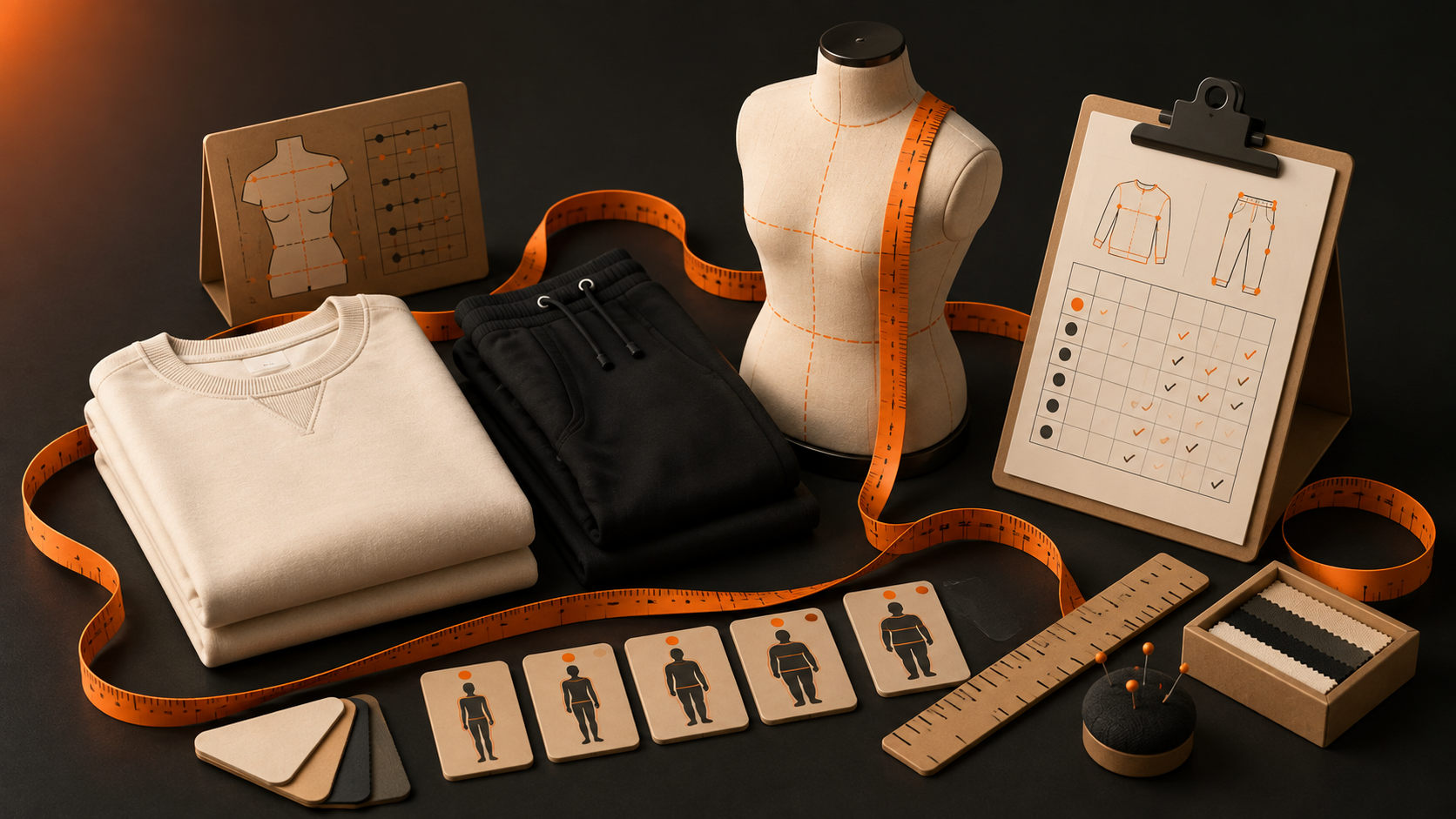
Treat every size label as a seller-specific index
A letter size is a menu choice, not a measurement. Medium from one listing can describe a different garment from medium on another, even when both products come from the same marketplace. Country conversions are useful for narrowing a search, but they cannot settle the order because they hide pattern shape, intended ease and the seller’s measuring method.
Sugargoo’s published buying flow asks the buyer to select the product size, color and quantity before adding the item to the cart or purchasing it. That makes the variant decision a buyer responsibility. The agent can place the chosen order and coordinate with the seller, but it cannot know whether you want a close fit, a straight fit or deliberate oversizing unless the listing and your instructions make that choice executable.
Replace “I usually wear large” with a comparison question: which listed variant is closest to a garment that already fits the way I want this new garment to fit? This turns sizing from identity into evidence.
Start with a garment you already trust
Official Sugargoo sizing guidance recommends measuring a shirt or pair of pants that fits well while it lies flat. This is a stronger baseline than comparing your body directly with an unfamiliar garment chart. A reference garment already contains the wearing ease, cut and styling preference that made the fit successful.
Choose a reference from the same category and a similar fabric behavior. A rigid overshirt is a poor benchmark for a stretch knit, and tailored trousers should not be compared with elastic joggers. Fasten buttons and zippers, smooth the garment without stretching it, and use the same edge points each time. Record both the number and the method: pit to pit, shoulder seam to shoulder seam, back length from a defined point, waistband across, rise, thigh and inseam where relevant.
Make one measurement pass, reposition the tape, then repeat. If the results differ, your endpoints are not stable.
- Name the reference garment and describe how it currently fits.
- Record whether a width is measured flat or doubled as a circumference.
- Note stretch, lining, thickness and adjustable features.
- Separate must-match dimensions from dimensions with more tolerance.
Define the intended fit before opening the chart
A good reference does not mean the new garment should copy every number. Decide what should remain the same and what should change. You may want a hoodie with the same body width but a shorter length, trousers with a familiar waist and more room through the thigh, or a jacket that can accommodate a layer underneath. Write those differences in plain language before looking at seller sizes.
Classify each dimension as a ceiling, a floor or a target band. Sleeve length may have a ceiling because extra length is inconvenient. Thigh width may have a floor because anything smaller restricts movement. Chest width may work as a band around the reference. Do not borrow universal ease allowances from a chart on another website. Fabric, cut and personal preference decide how much room is useful.
This produces a fit fingerprint: category, reference measurements, desired change and two rejection conditions. A rejection condition should be observable, such as “do not choose a variant whose listed waist is below the reference” rather than “must fit perfectly.” It keeps you from selecting a larger label that solves one dimension while quietly breaking another.
Decode the seller chart as a data schema
First determine what the chart measures. Sugargoo’s official material notes that Taobao size charts commonly describe the clothing rather than the wearer’s body. Look for a garment diagram, measurement labels and any note explaining manual-measurement variation. If the listing shows body recommendations instead, do not compare those numbers directly with flat garment widths.
Normalize units and geometry before comparing. A flat chest measured from armpit to armpit is a width; some charts present the doubled circumference. A flat waistband can also appear as either a single width or a full measurement. Translation alone does not resolve that geometry. Use the diagram, the scale of the values and relationships between sizes together. If a supposed adult shirt chest is implausibly narrow, test whether the chart is showing half-width.
Copy only the candidate rows into your fit sheet. Put seller dimensions beside reference dimensions and calculate the difference for each must-match field. Preserve the original chart capture and variant name. If the product page changes later, you still know which evidence supported the choice.
Build a fit brief that survives the order handoff
The final brief should be short enough to audit in a minute. Record the listing identity, selected color, selected size, quantity, chart date or capture, garment type, reference garment and the decisive dimensions. Then add one sentence explaining why the variant won. For example: “Choose XL because its listed waist stays above the reference while its inseam remains within the target band.”
Keep your measurement logic separate from any order remark. A remark should contain only an instruction the purchasing team or seller can execute. Your private fit sheet can hold calculations and preferences. Asking an agent to “pick whatever fits me” transfers a judgment without supplying body shape, fabric behavior or acceptable ease. Selecting the variant yourself after reviewing evidence keeps responsibility clear.
Before payment, verify that the cart still shows the intended size, color and quantity. Similar option names, thumbnails and translated labels can make a correct analysis attach to the wrong variant. Read the chosen row back against the seller’s original option and your saved capture.
Resolve conflicting evidence without averaging it away
Listings sometimes contain a chart, model notes, general height-and-weight suggestions and customer comments that point in different directions. Do not average them into a fictional answer. Rank evidence by how directly it matches your decision. A dimensioned chart for the exact product is more transferable than a letter-size conversion. A buyer comment may reveal cut or fabric behavior, but it rarely provides enough measurement detail to prove your size.
Check internal consistency. Do dimensions progress logically across rows? Does the written product description match the chart’s silhouette? Are two charts shown for different versions? If the selected color or upgraded edition has a different material or cut, make sure you are reading its chart rather than the default image.
When a decisive dimension is absent or two official listing elements contradict each other, label the choice unresolved. Use the available order communication route to ask one narrow question that the seller can answer. If the uncertainty cannot be resolved, decide whether the item’s value and return practicality justify accepting that fit risk. Uncertainty should be priced as a decision, not disguised as confidence.
Compare tops and bottoms with different control points
For tops, chest, shoulder, length and sleeve interact. A dropped-shoulder pattern can look wide in the chest and long in the sleeve without behaving like a conventionally cut shirt. Compare the seller diagram with the product silhouette, then prioritize the dimensions that determine the intended look. Neck opening and hem width may matter more than a familiar letter label for certain garments.
For bottoms, the waistband is only the start. Identify whether it is fixed, elastic or adjustable, then compare rise, hip or seat, thigh, leg opening and inseam as available. Two trousers with the same waist can feel completely different because the rise changes where that waist sits. Compare to a reference worn at the same position.
Outerwear needs a layering plan. Use a reference jacket worn over the layer you expect to use. Do not invent a stretch percentage when the seller does not provide one. Treat missing stretch data as uncertainty.
Use warehouse evidence to confirm identity, not rescue sizing
When the item reaches the Sugargoo packing center, start by matching the received size label, color and quantity with the paid order. Review the available inspection evidence for obvious identity or construction conflicts. Warehouse receipt is a valuable checkpoint, but it does not turn an undocumented fit preference into something staff can infer.
Compare only measurements produced with known endpoints. A number without a clear tape position can look precise while measuring a different path from your reference. If the available evidence cannot confirm the decisive dimension, keep the result as “not verified” rather than forcing it into pass or fail. Any request for additional evidence should name the exact garment points and use the options currently shown in the account; do not assume a service or price that is not displayed.
Archive the seller chart, selected variant, fit brief and warehouse result together. If the item fits well after delivery, the record becomes a calibrated reference for a future order. If it does not, compare the physical garment with the saved evidence before blaming the label. The goal is not a universal conversion table. It is a personal measurement system that improves each time real outcomes return to the sheet.
Questions buyers ask about Sugargoo clothing sizes
Can I order my normal US or EU size? Use it only to narrow the candidates. Select from the seller’s exact chart after comparing garment measurements.
Should I measure my body or my clothing? Both can be useful, but a well-fitting garment is the cleaner comparison when the seller chart also shows garment dimensions.
Do I double a flat chest measurement? Only when comparing it with a chart that uses full circumference. Keep width and circumference clearly labeled.
What if the listing has no size chart? Treat the decisive fit information as missing. Ask a focused seller question or accept the uncertainty consciously; do not invent a conversion.
Are model height and weight enough? No. They lack body proportions, fit preference and garment measurements. Use them as context, not proof.
Should I always size up for Asian clothing? No. “Size up” is a shortcut that can fix one dimension and ruin another. Compare the actual row values.
How do I choose between two candidate sizes? Apply your floor, ceiling and target-band rules to the dimensions that matter most for that garment.
Can Sugargoo choose my size for me? The platform can purchase the selected variant, but your fit preference and comparison logic remain buyer decisions.
What should an order remark say? Include only a precise, executable condition. Keep personal calculations in your fit sheet.
What is the final pre-purchase check? Confirm the exact variant in the cart, the applicable chart, measurement geometry, target fit and rejection conditions. A good size choice is not certainty; it is a traceable decision made from compatible evidence.